
Past (2016), present (2026), and future of (m)otherboard...
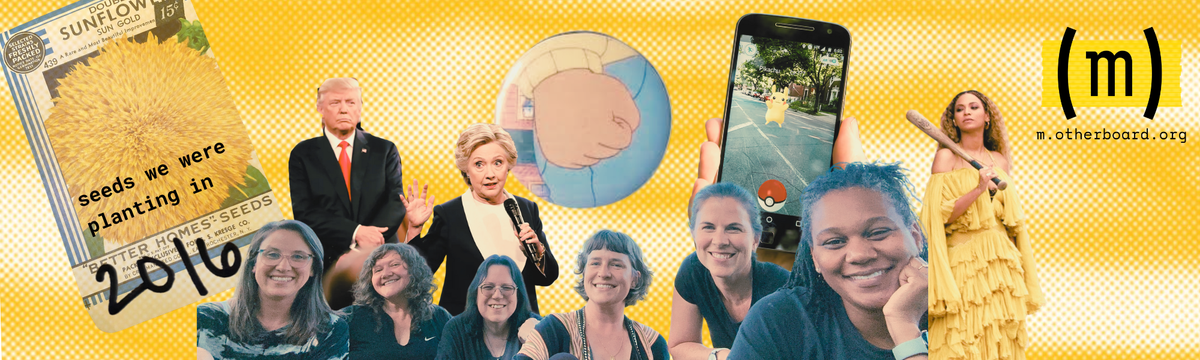
Progress is nonlinear. The spiral cycles between past, present, and future.
This understanding of time is central to our (m)otherboard manifesto and theory of change.
So it comes as no surprise to us that social media trends are looking back to 2016 as an answer to the question: ‘how did we get here?’ We’re seeking a sense of hope, possibility, and perhaps trying to get back touch with a sense of agency and optimism that has been squashed by so many systemic disruptions of the past decade.
2016 was a year when the influence of The Algorithm began to hit mainstream consciousness. How did Trump get elected? Must have been the filter bubble!
But some of us saw the 2016 shift coming, or at least were warning of the signs of tech’s potential harm. So what were the god(m)others up to in 2016?
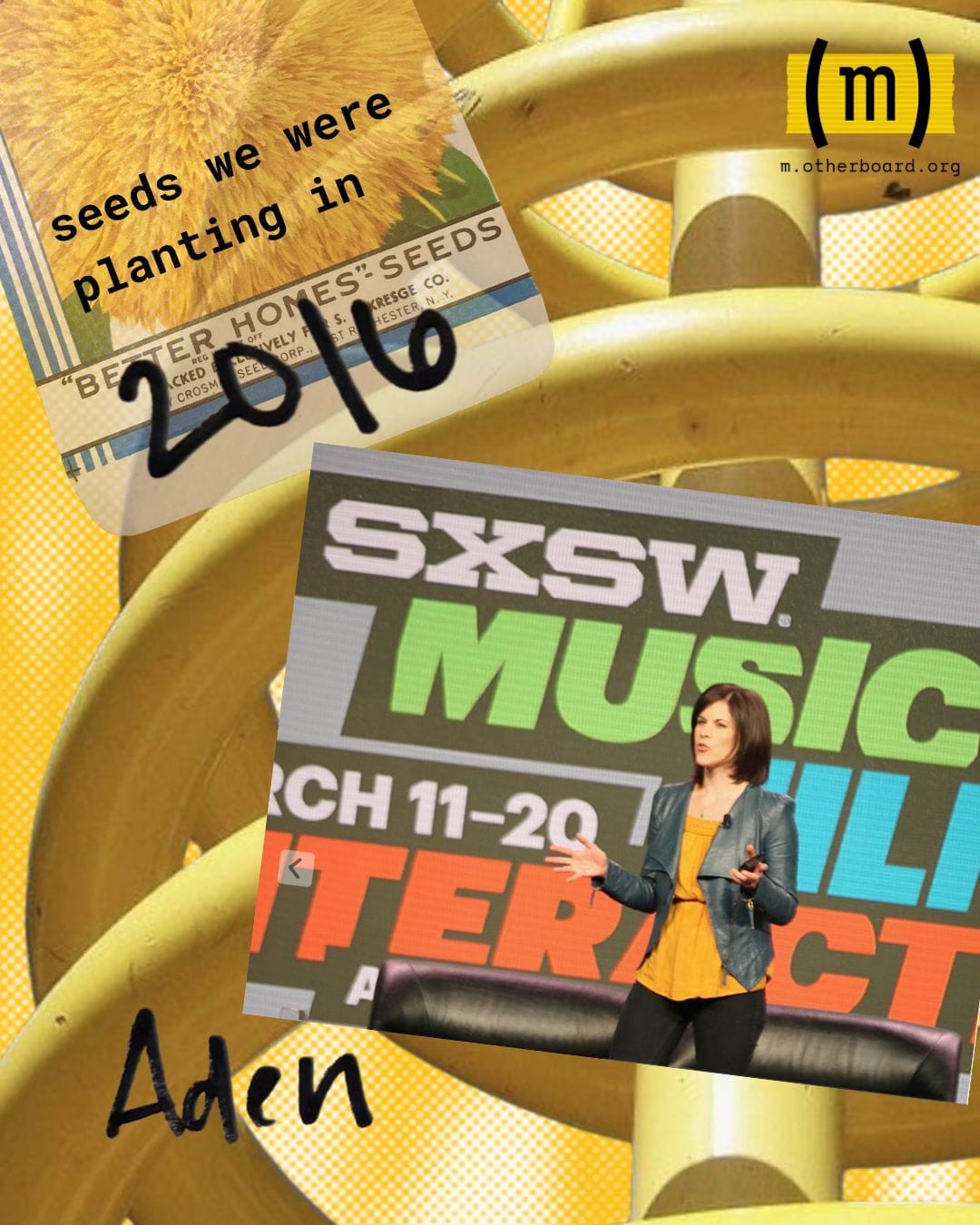
🐝 Aden was using open data and technology to empower local communities across the country through her role on the team of the US Chief Technology Officer in the Obama White House. Her keynote at the 2016 SXSW was about unlocking the potential of government and community generated open data to solve real problems...AKA tech in service of collective good!
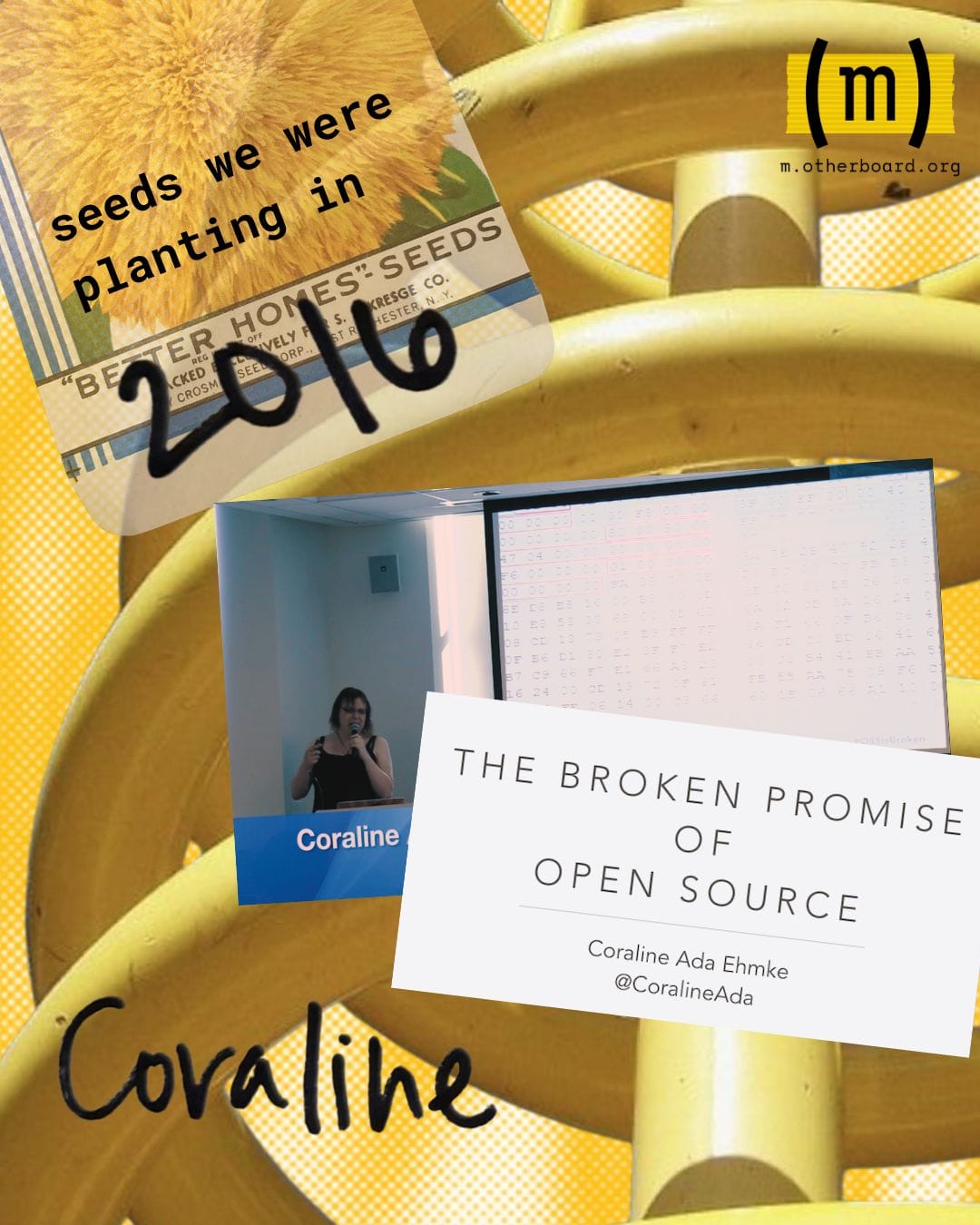
⭐️ Coraline gave eight talks that year. The highlight was her keynote at the Write/Speak/Code conference, an event organized around helping marginalized technologists find their voices and their power. In her talk she delivered a scathing criticism of the meritocratic principles underpinning the open source community, and offered an alternative vision for a more equitable open ecosystem. This talk helped establish the philosophical foundation for her future work in open source ethics and governance which has shaped (m)otherboard’s founding governance and fed our brains in book club.
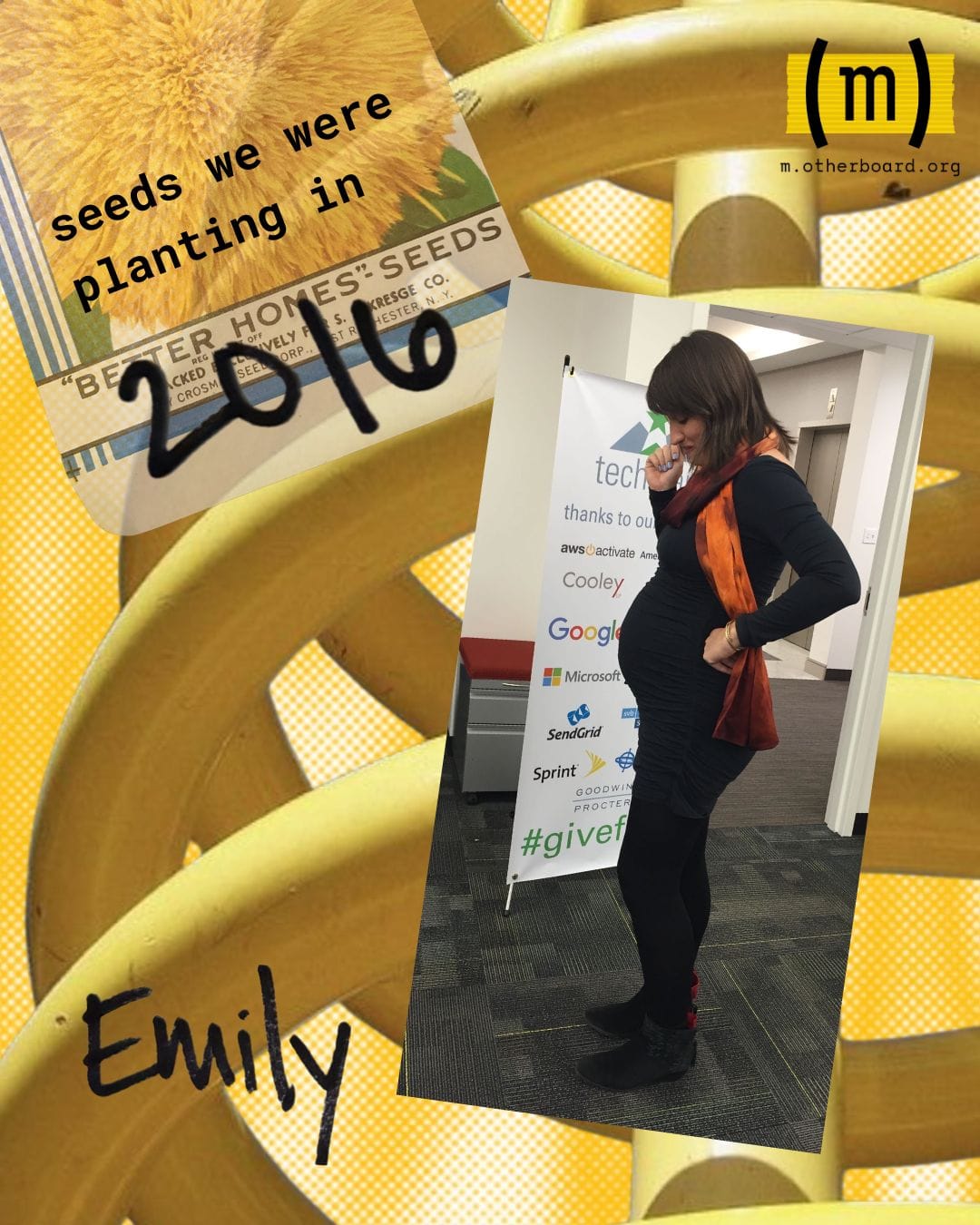
💫 Emily was going through Techstars Boston with Seed&Spark while pregnant with her first child. This was the year she started more deeply exploring independent models for media distribution, traveling to more than 20 cities to teach workshops on creator sustainability. It was also the year she launched a digital series on sexual consent she co-created called F*ck Yes, which was viewed more than 80M times on YouTube that year.
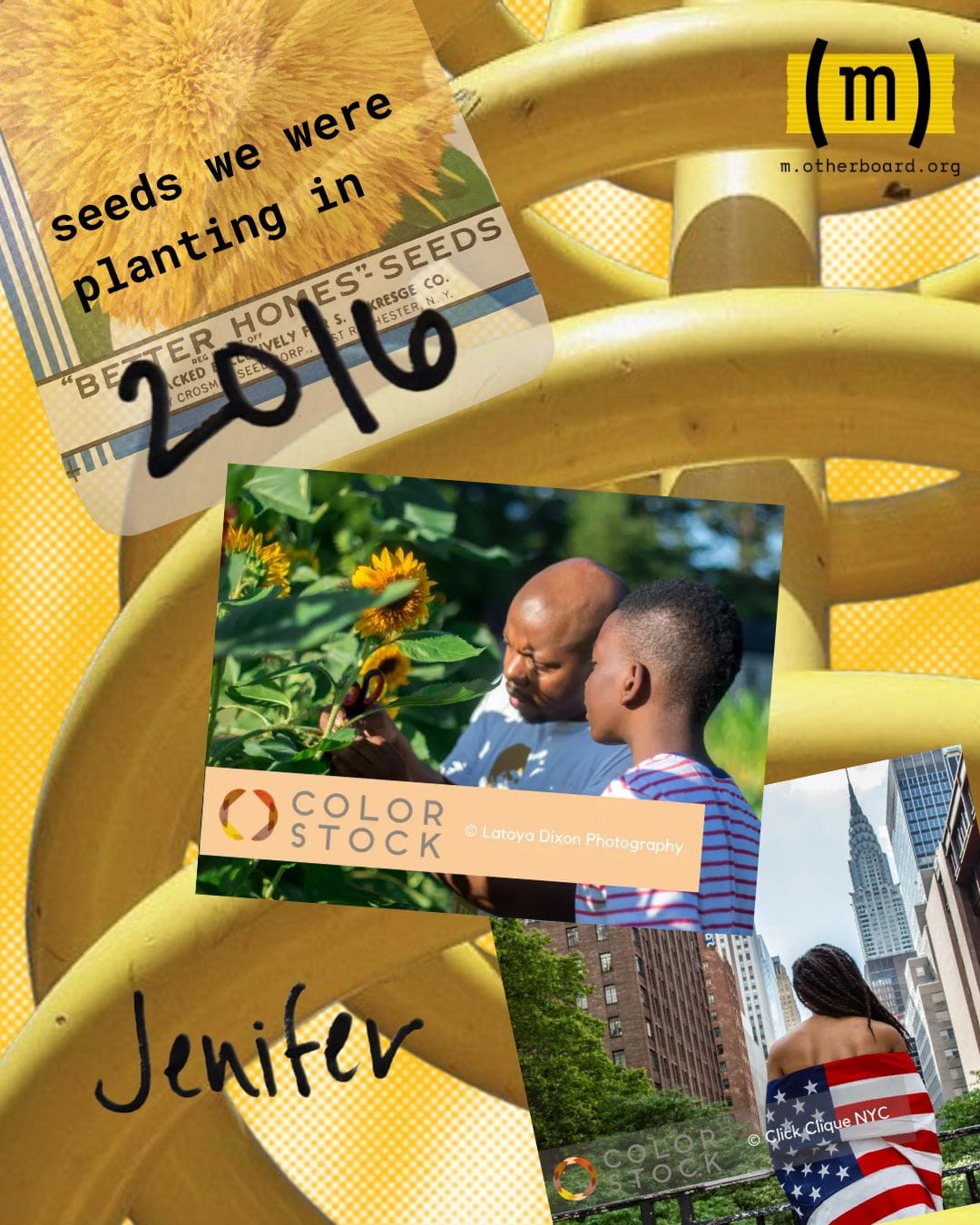
🌻 Jenifer’s company Colorstock was rocking and rolling and selling photos daily. A culturally intelligent stock photo marketplace connecting emerging photographers to brands, marketers, and content creators, 2016 customers ranged from brands like Slack, Vice, NYU, Color of Change, and the YWCA who drew on more diverse imagery to change the visual narrative.
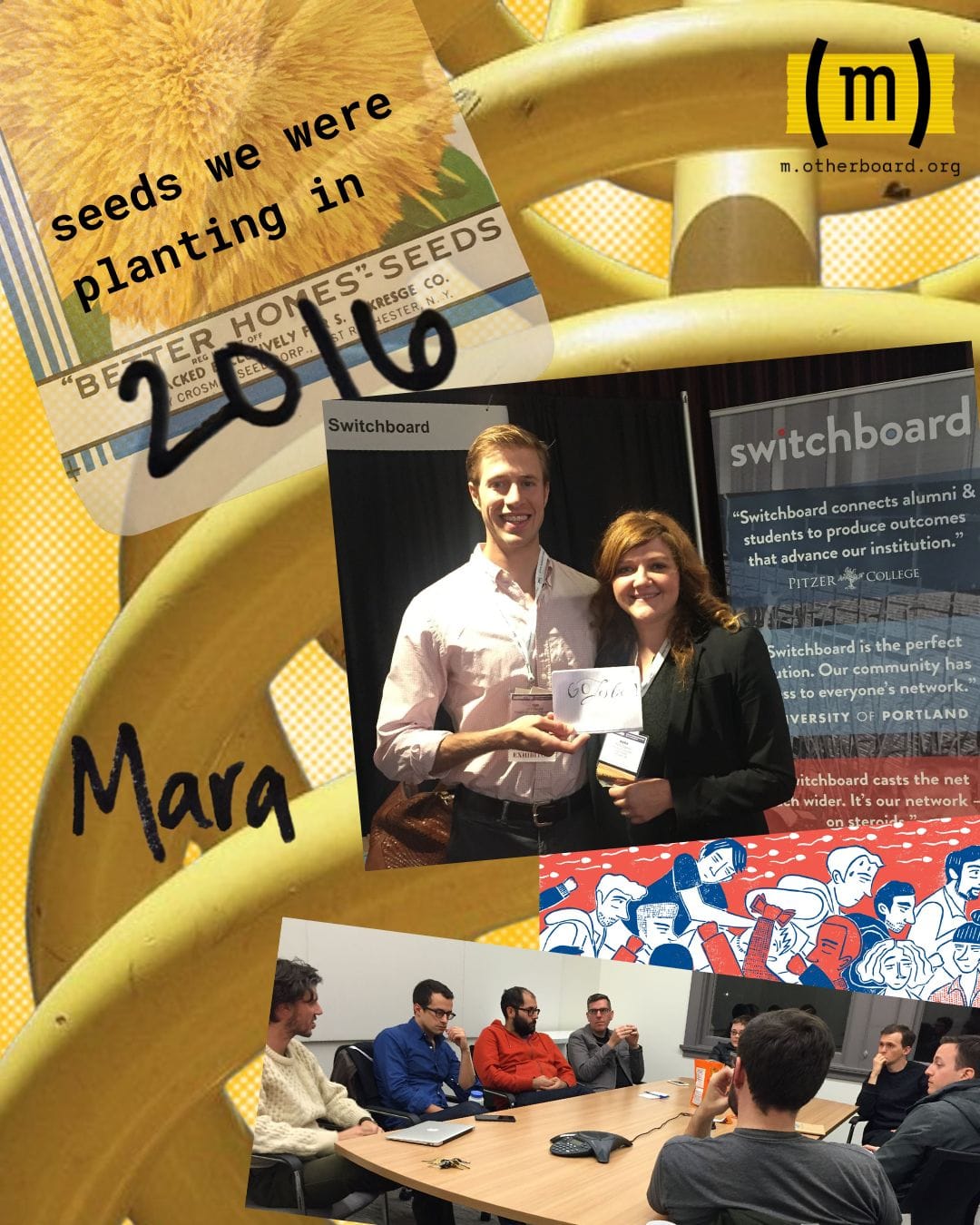
🌼 Mara was criss-crossing the country doing B2B sales of her software company, Switchboard. She’d raised some VC so she could afford to attend this higher ed conference. Then she began to understand the depth of the systems failure. She co-founded a lobbying organization and chamber of commerce with these seven men in tech [formerly or Apple, Twitter, Stripe, Slack. And there in the red hoodie is Darius, an early (m)otherboard member!] The org, Better Portland, is still around. With Jenn Brandel, she also published Sex & Startups, a feminist manifesto for an alternative vision for VC investment that generates money and meaning on longer time horizons.
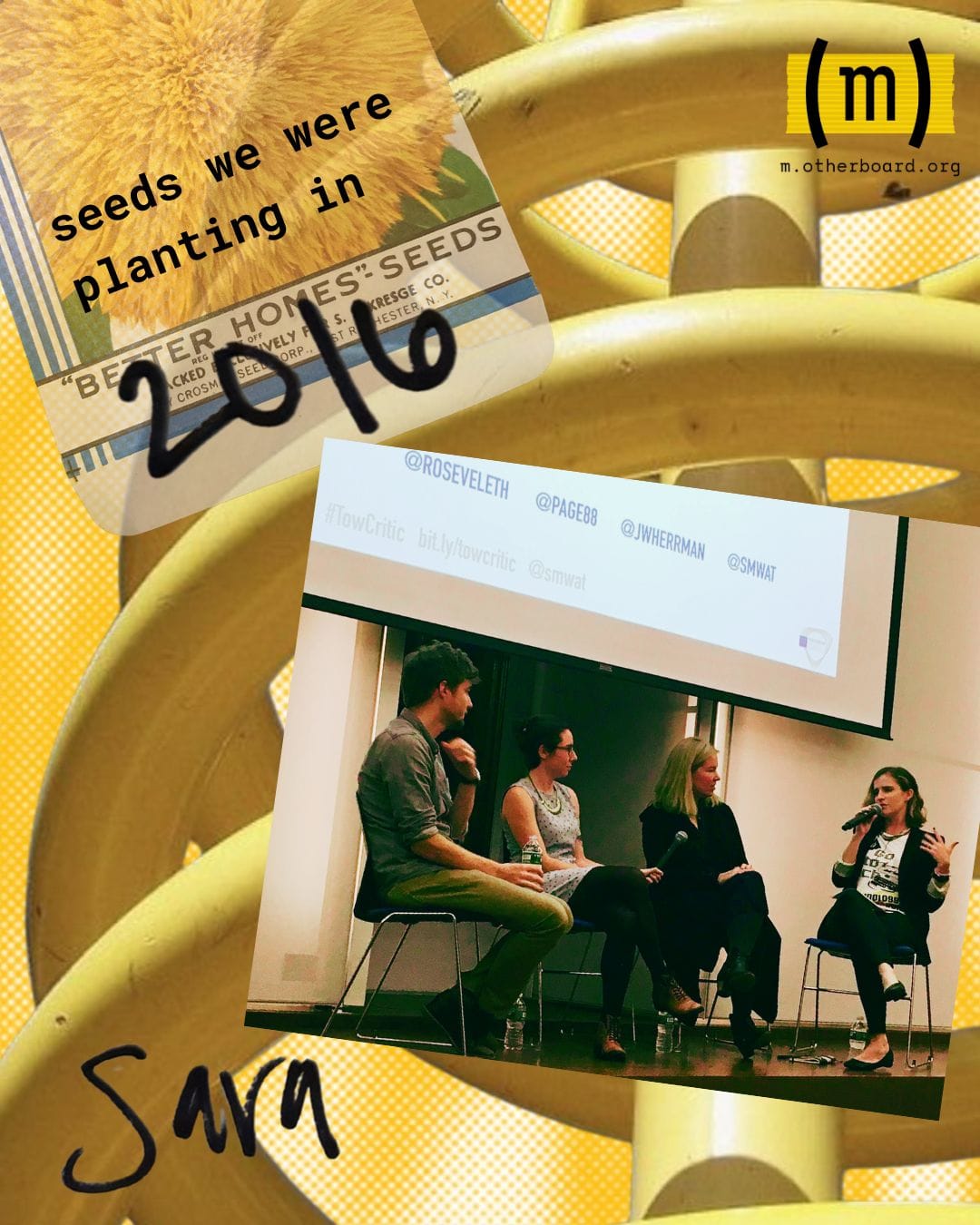
📒 Sara was publishing Toward a Constructive Tech Criticism, which argued that besides deconstructing, naming, and interpreting tech’s effects on society, criticism has the potential to assemble new insights and interpretations and pose alternative possibilities. Constructive criticism offers readers the tools and framings for thinking about their relationship to technology and their relationship to power. She was also exploring how we needed new narratives about AI if we want to understand how these technologies fit into our lives today, and in the future. She was advocating for users to have more control over the parameters shaping the personalization of our algorithmic digital lives.
Join us February 2 for a members-only town hall on AI use
We're gathering to think together about how we want to relate to AI—as individuals, in our organizations, and as a collective. This session is invitation to be intentional about our choices, to surface our concerns and practices, and to co-create governance that reflects our values.
Monday, February 2nd | 7:30-9:00 PM ET (virtual)
(m) at Sundance://Who Stewards the Future: Artists, Audiences, and the Fight for Agency
Saturday, January 24 12:00 PM–1:00 PM MST Park City, Utah
As technology increasingly mediates how we fund our work, tell our stories, and reach our audiences, are we building systems that expand human agency—or erode it? This panel explores how the platforms we use and the stories we tell about technology shape both our power as artists and our audiences' sense of control over their own futures.
Featuring:
- Emily Best, Seed&Spark (Moderator)
- Baratunde Thurston
- Charlie Tyrell, The AI DOC
- Christie Marchese, Kinema
- Dayo Olopade, Mozilla Foundation / OTV
- Valerie Veatch, filmmaker of Ghost in the Machine
About Solidarity House
The Solidarity House is a collaborative space and activation presented by a growing coalition of purpose-driven media, narrative, and cultural organizations. Building on over a decade of coalition work at Sundance Film Festival, it is designed to strengthen our collective capacity to imagine and build the future of independent storytelling. Learn more, review the Solidarity House Commitments, explore programming and more at: www.thesolidarityhouse.com.
– The God(m)others